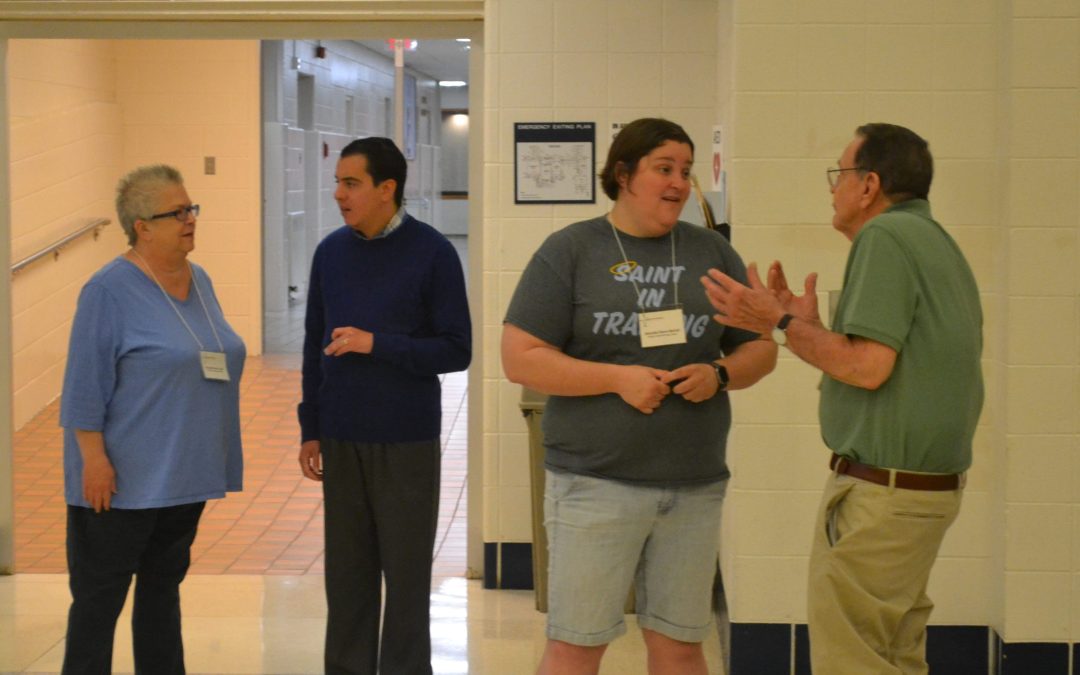
Pope Leo XIV chose the papal motto in Illo uno unum, which means “in the One, we are one.” As Leo leads our Church in a modern era of political polarization and complexity, Viatorians took a day of last week’s annual Provincial Assembly to explore the role of the Catholic Church and Viatorian Community in responding to this issue.
“In this country as in many countries, there is a lot of division and a lowering of political and civil discourse standards. We have a role in trying to make things better,” Fr. Mark Francis, CSV, Provincial, said. “With Pope Leo, we need to be part of this era of change in the Church, in unity and synodality.”
Walking with Fr. Aaron
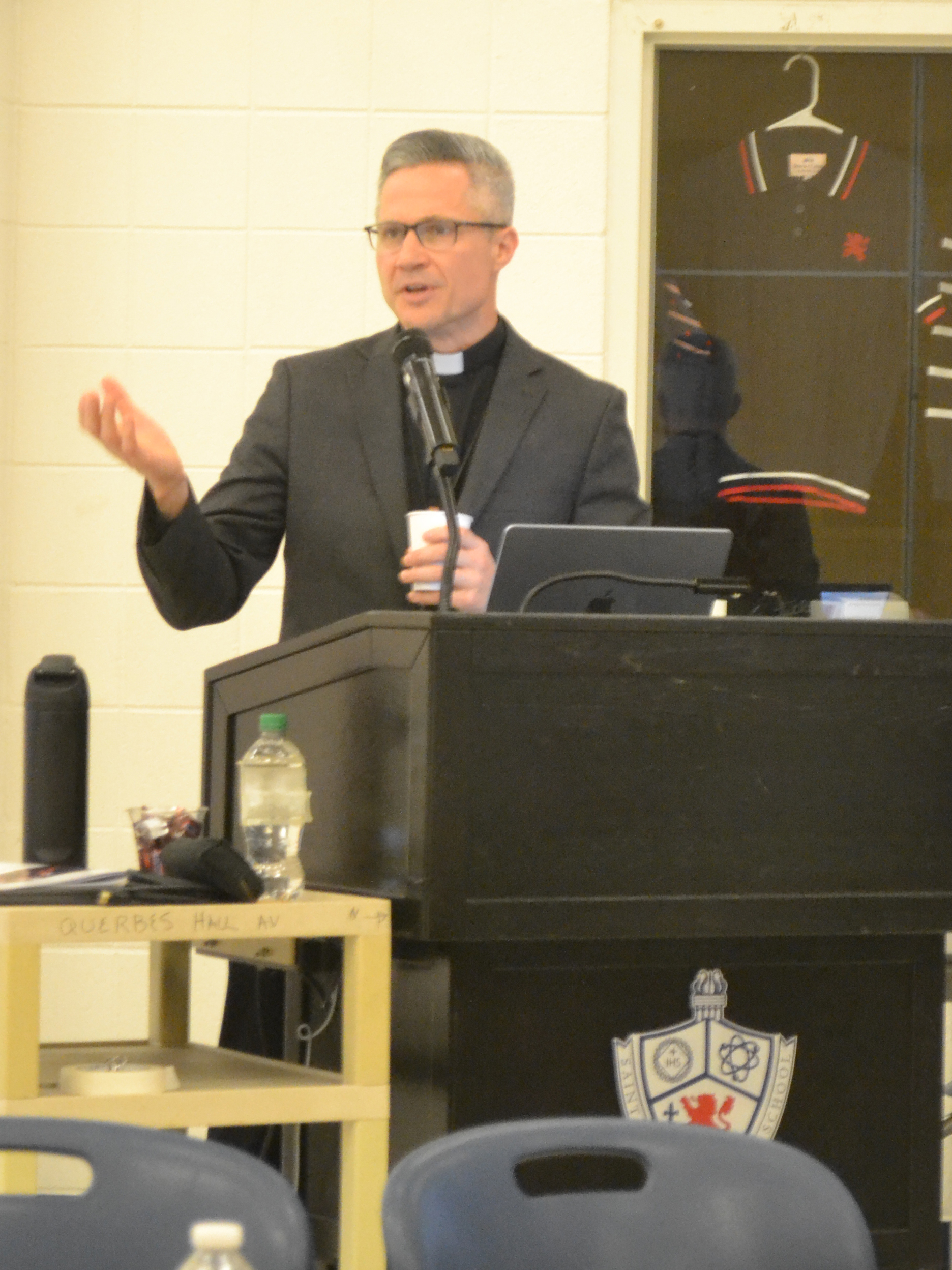
Fr. Aaron Wessman, a Glenmarian Home Missioner and priest
Fr. Aaron Wessman, a Glenmary Home Missioner, led group sessions on Wednesday. Glenmarians go to live in counties in the rural US without a Catholic presence to encounter the community and establish Catholic parishes. This focus on underserved rural communities resonates with Viatorian and our roots in Vourles and Fr. Querbes’ founding vision.
Fr. Aaron presented and facilitated discussions based on his book, The Church’s Mission in a Polarized World. From 2014 to 2018, he studied for a PhD in Belgium; upon returning to the US, he quickly sensed the polarization in American society, in conversations he witnessed, and even in his own thoughts and words. It stirred him to introspection as well as beginning to talk more with people, dig into research, and then begin this larger project.
In his presentation to our community, he discouraged becoming apolitical. “Getting involved in the political process is important, and the Church encourages that. But I like to take a step back and explore: How we can better understand the United States today?” Fr. Aaron said. “The majority of people would prefer to live in a unified society and desire to deepen communion, while a smaller few cause this polarization.”
With respect to political parties, he also did not insist that Catholics cannot belong; rather, he cautioned that identifying with them cannot become absolute or fundamental. “As a Catholic, if you belong to a political party, you also need to be a voice who is willing to challenge that party, especially in moments when the positions of the party do not match with our teachings or beliefs,” Fr. Aaron said. “When we examine our consciences, we have to ask whether our political party has become an idol.”
Navigating the Scene and Finding the Path Forward
Fr. Aaron coupled his research with community encounters, retreat and workshop facilitation, and even participation in Braver Angels events. These events are conferences that model civil and thoughtful engagement, both among attendees and in on-stage panels. Attendees self-identify with lanyards that are red (for conservative or Republican), blue (for liberal or Democrat), or white (for independent or neutral, such as for clergy). All of these explorations helped him identify what exactly toxic polarization is.
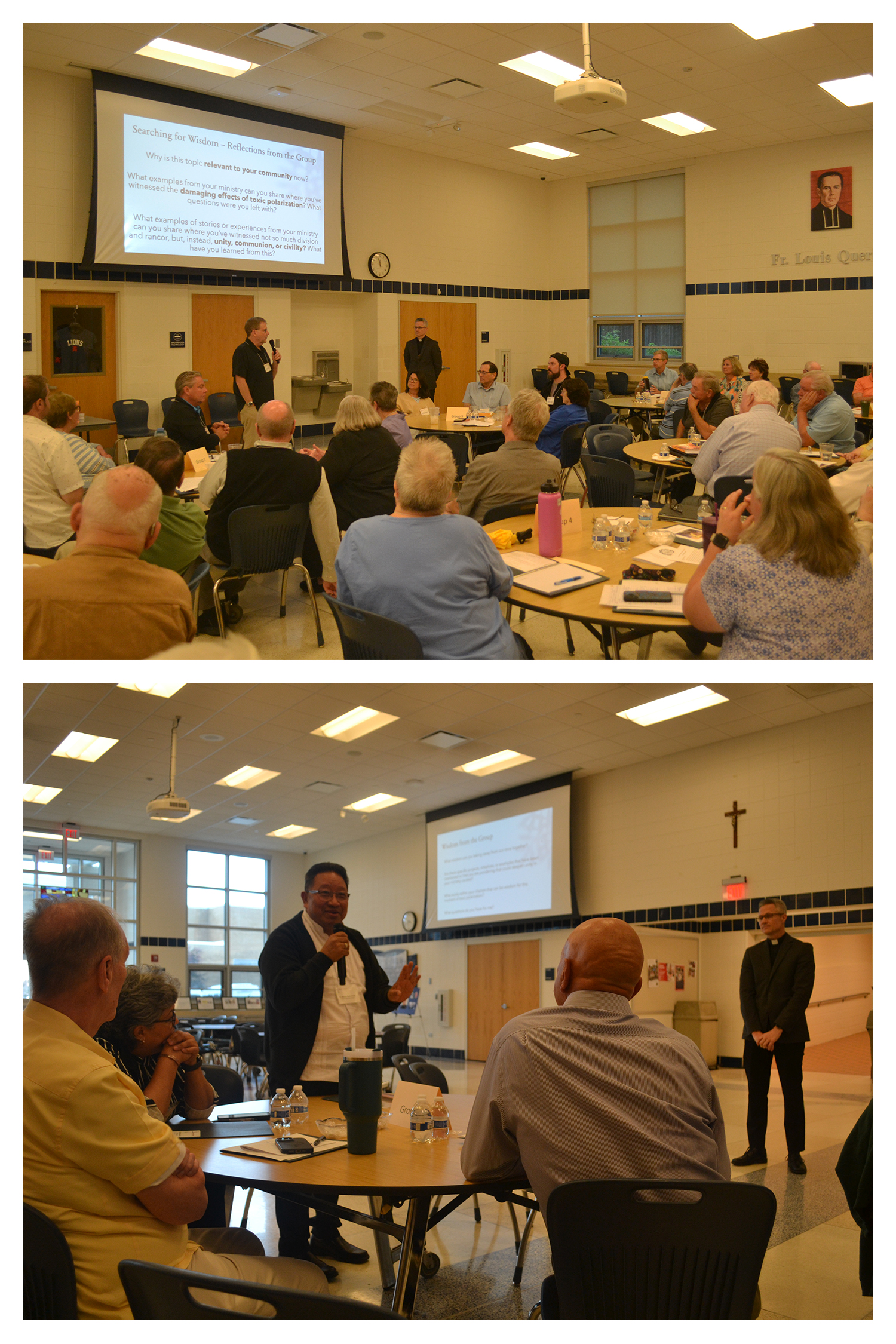
Following discussions, Viatorians shared bits from their tables with the large-group, such as these moments with (top) Fr. Corey Brost, CSV, and (bottom) Fr. Moses Mesh, CSV.
Fr. Aaron has found that this starts as feelings of isolation that then lead to factions, decreased interactions between these factions, and the lost sense of common bonds. Then, groups begin to misunderstand and distrust one another, leading each group’s members to care only for their own and wish ill on the others – a dynamic that can then permeate many areas of society. When rhetoric and action escalate, it can even lead to violence.
“When people feel alone and bleak, they often desire strong leaders who ‘restore order’ and act where ends justify the means. It happens when people feel uncertain. People go looking for easy answers and solutions. When we’re scared or afraid, we don’t want nuance or complexity. The ones who are already marginalized often get targeted for scapegoating and further marginalization,” Fr. Aaron said.
In such a climate, reading the signs of the times and identifying who society is marginalizing is as important as ever. People of goodwill, Christians, Catholics, and Viatorians must remain vigilant and stand ready to respond with advocacy, accompaniment, and service.
When it comes to voting patterns and party affilitation, for better or worse, similar numbers of Catholic self-identify as Republicans and Democrats. Some Catholics are also independents and/or swing voters. “Maybe we have a special role to play in unifying the country, in modeling how we can vote different ways and still believe in Jesus Christ,” Fr. Aaron said.
In his experience, his studies, and his prayerful reflection, Fr. Aaron has some prescriptions for our Catholic response. “Our goal is to help: to help those feeling uncertain say, ‘I am not alone,’” Fr. Aaron said. “We can help those who have separated off say, ‘I am called to encounter others.’ We can help those who are blaming say, ‘I’ve contributed to this and need to change.’ We can help those who are rigid say, ‘I wonder what I’m missing and what can you help me understand.’ We can help those who are culture warriors say. ‘I am called to love people, even my enemy.’”
Working Together to Respond
Fr. Aaron mixed his presentations of stories, research, and recommendations with small-group discussions and large-group sharing. Mixed groups of associates, brothers, and priests engaged with Fr. Aaron’s challenging questions.
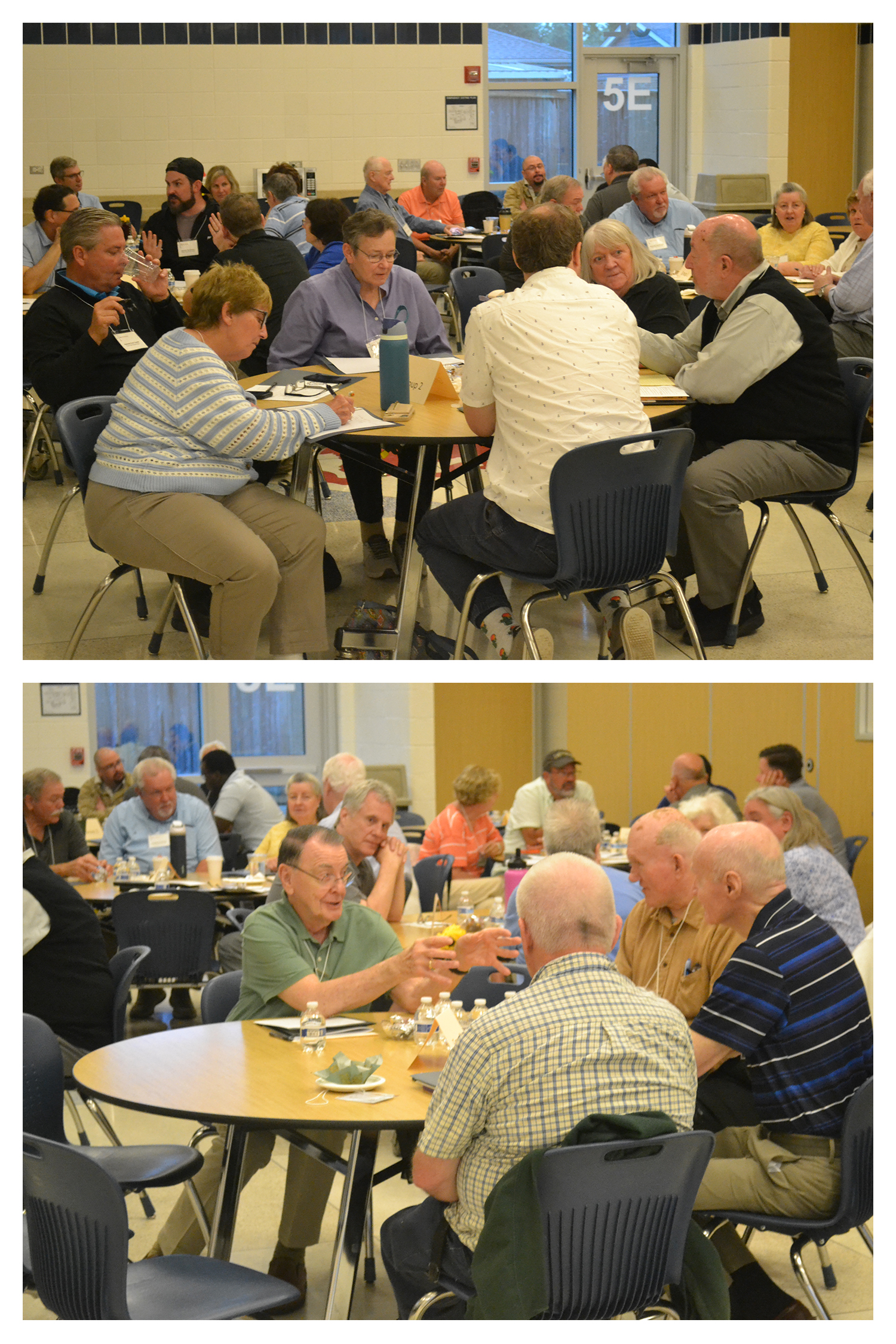
Viatorian associates and religious share in ministry and community life. Such community bonds and the fellowship and social life in the Viatorian Community fuel lively conversations that further our faith formation and mission-rich action.
Fr. Mark suggested seeking news and commentary from voices willing to see the full context. “It’s important to understand other people. Conservative commentator David Brooks, for example, can explain how someone would come to a position, even when he doesn’t agree with it,” Fr. Mark said. “When you look at young men and all the things they deal with in the modern age, especially with respect to masculinity, understanding becomes the bottom line for learning how to reach out and show respect to them – which is the basis for any kind of dialogue.”
Associate Patrick McGarry shared how people at his table discussed concerns for those who are coming of age in this climate – from young men seeking asylum to students at our high schools to the very children of our lay associates. “We talked about how polarization, and all of this attitude, can hurt people and dehumanize people, and we’re especially worried for young people,” Pat said.
Some Viatorian priests shared how people sometimes react strongly to homilies, even when preaching is firmly rooted in the Gospel and articulated carefully and deliberately. As a pastor, Fr. Jason Nesbit, CSV, hopes Jesus’ prayer and example sets the course to peace and unity. “We have the one Lord who gave himself for us all and who prayed in the Gospel of John that we ‘all may be one,’” Fr. Jason said. “I wonder how we can all be one, without playing zero-sum games, and working to honor the full love of God within us.”
Many Viatorians work closely with people made vulnerable in this climate. Some reflected on how human rights and human dignity must be upheld absolutely, without room for positions that are oppressive. Others shared hopeful stories of the Gospel inspiring a just response.
Fr. Tom Long, CSV, cited a family friend in Minneapolis and his Christian faith community. “In light of the hatred coming from the warrior mentality of excessive immigration enforcement, there came a common purpose from this Methodist congregation. Their humanitarian care – walking kids to school, delivering groceries, and more – was their way to live out the Gospel mentality,” Fr. Tom said.
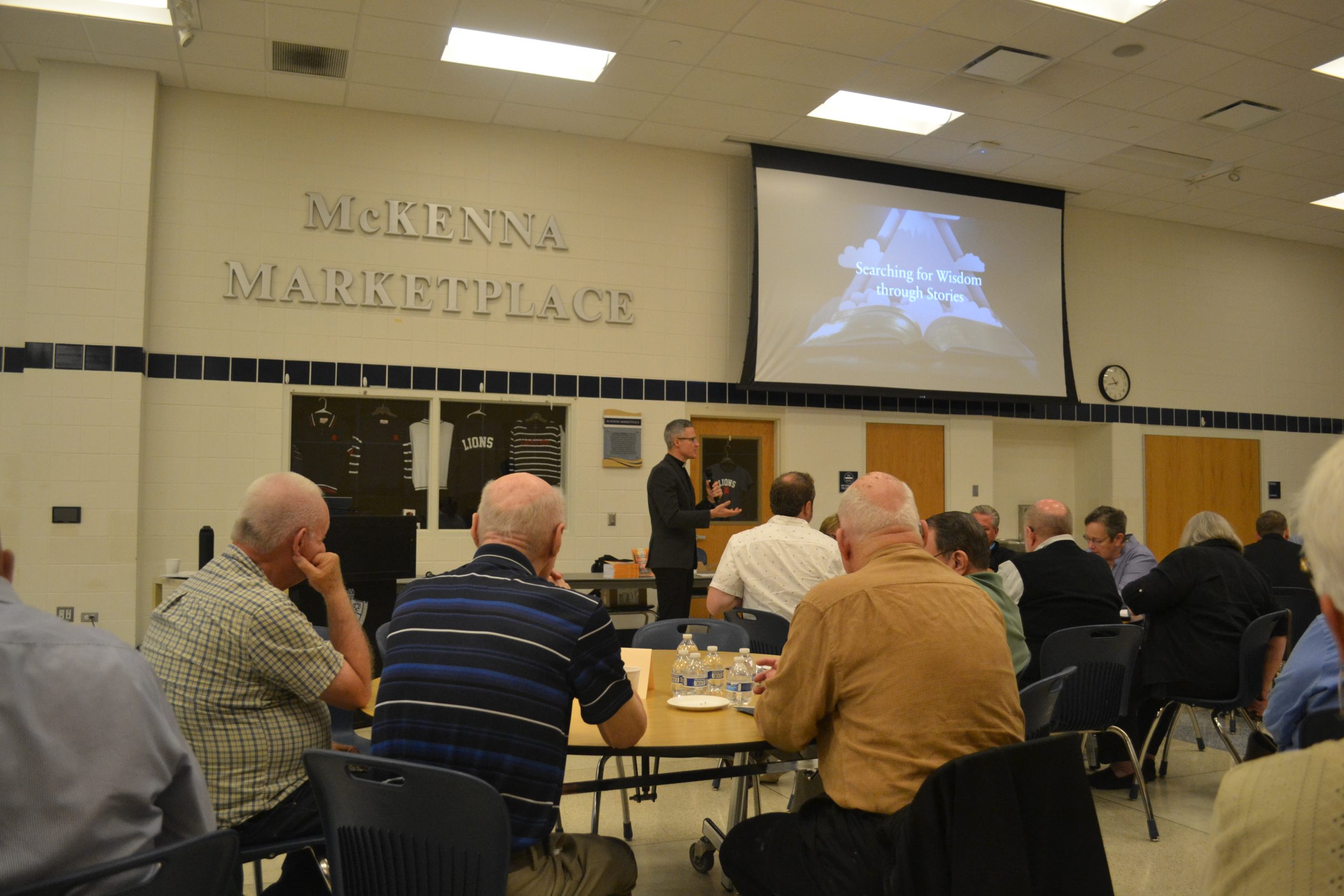
Our thanks to Fr. Aaron, a priest of a kindred mission spirit and a shared lively and enlightened faith!
The discussions and sharing reflected the Viatorian commitment to walk with and serve people who society tries to account of little importance. Viatorians voiced hope that our faith communities – places where faith is lived, deepened, and celebrated – will continue to be part of the antidote to such toxicity
These reconciliatory practices can certainly be challenging and tiring, but persistent action helps us contribute to healing and reintegration. As a way of staying grounded and remaining agile in our patience, grace, and compassion, Fr. Aaron had a simple suggestion – and one rooted in Jesus’ Gospel example.
“Jesus was curious. With the crippled man at the pool of Bethesda and the blind beggar Bartimaeus, he doesn’t assume anything – he asks, ‘What do you want me to do for you?’” Fr. Aaron said. “Have a question ready at the back of your mind. ‘Can you help me understand?’ ‘What am I missing?’ Or say, ‘I see things differently, but I’m willing to think about it some more,’ which can give you a chance to step away. Develop a lifestyle of curiosity.”