
Easter Day 2026
Acts 10:34a, 37-43; Psalm 118:1-2, 16-17, 22-23; Colossians 3:1-4; John 20:1-9
At dawn, amid fear, confusion, and grief, the three women came to the tomb. The stone was rolled away. And the message rang out: “Do not be afraid… He is not here; he has been raised.”
The Gospel of Matthew is strikingly honest: the first witnesses are afraid; the guards are paralyzed; and even truth itself is contested by misinformation and power. Yet, into that very mixture of fear and distortion, God acts decisively. The resurrection does not occur in a peaceful world—it breaks into a troubled one.
That is where we find ourselves this Easter. We live in a time marked by a war of choice with Iran; we are a nation deeply divided over immigration, identity, and the nature of democracy; economic uncertainty weighs heavily on families and communities. Like the women at the tomb, we approach the future with a mixture of fear and hope, unsure of what we will find.
But Matthew’s Gospel insists: the decisive act of God has already occurred. The angel’s first words are not a command to understand, solve, or control the world’s crises. They are simpler and more radical: “Do not be afraid.” This is not naïve optimism. It is a declaration that fear does not have the final word—not in history, not in politics, not in the human heart.
In Matthew’s account, lies circulate alongside the truth. The guards are bribed, some say, and a false narrative spreads. That detail feels painfully contemporary. We, too, live in a time when truth is contested, when narratives are shaped by power, and when trust is fragile. Yet, the resurrection does not depend on universal agreement or perfect clarity. It rests on God’s fidelity.
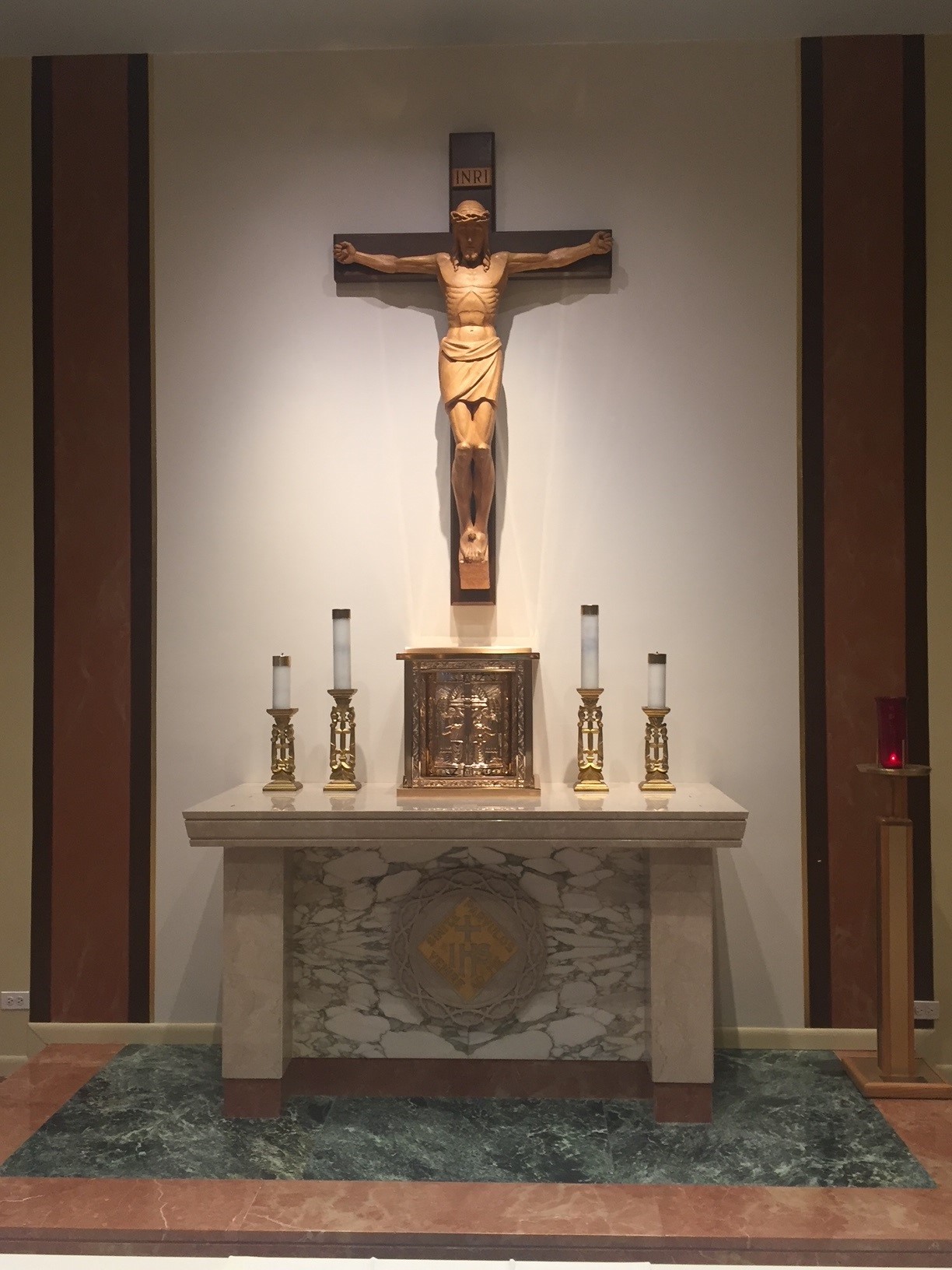
The crucifix and tabernacle at Saint Viator High School Alumni Memorial Chapel in Arlington Heights, IL.
Easter hope, then, is not passive. It is active, demanding, and deeply realistic.
- It calls us to resist the logic of war by becoming agents of peace.
- It challenges us to move beyond entrenched divisions toward genuine encounter and dialogue.
- It urges us to stand with those burdened by economic hardship, not with slogans but with solidarity.
The women ran from the tomb, Matthew tells us, “with fear and great joy.” That may be the most honest description of Christian hope available to us today. We do not deny fear—but we do not let it define us. Because the final word of the Gospel is not fear, or division, or even death.
The final word is hope promised to us by Jesus being raised from the dead, who is now forever in our midst: “I am with you always, to the end of the age” (Mt 28:20).
Fr. Mark Francis, CSV
Provincial Superior, Province of Chicago